Wall applications
Painted walls
Painted drywall and interior plaster can be suitable once the coating is stable, fully cured and clean. Gloss level, repair patches and previous paint quality can affect the result.
UV direct-to-surface printing opens up creative options for painted walls, architectural materials, mounted panels and selected floors. The right preparation is just as important as the artwork.
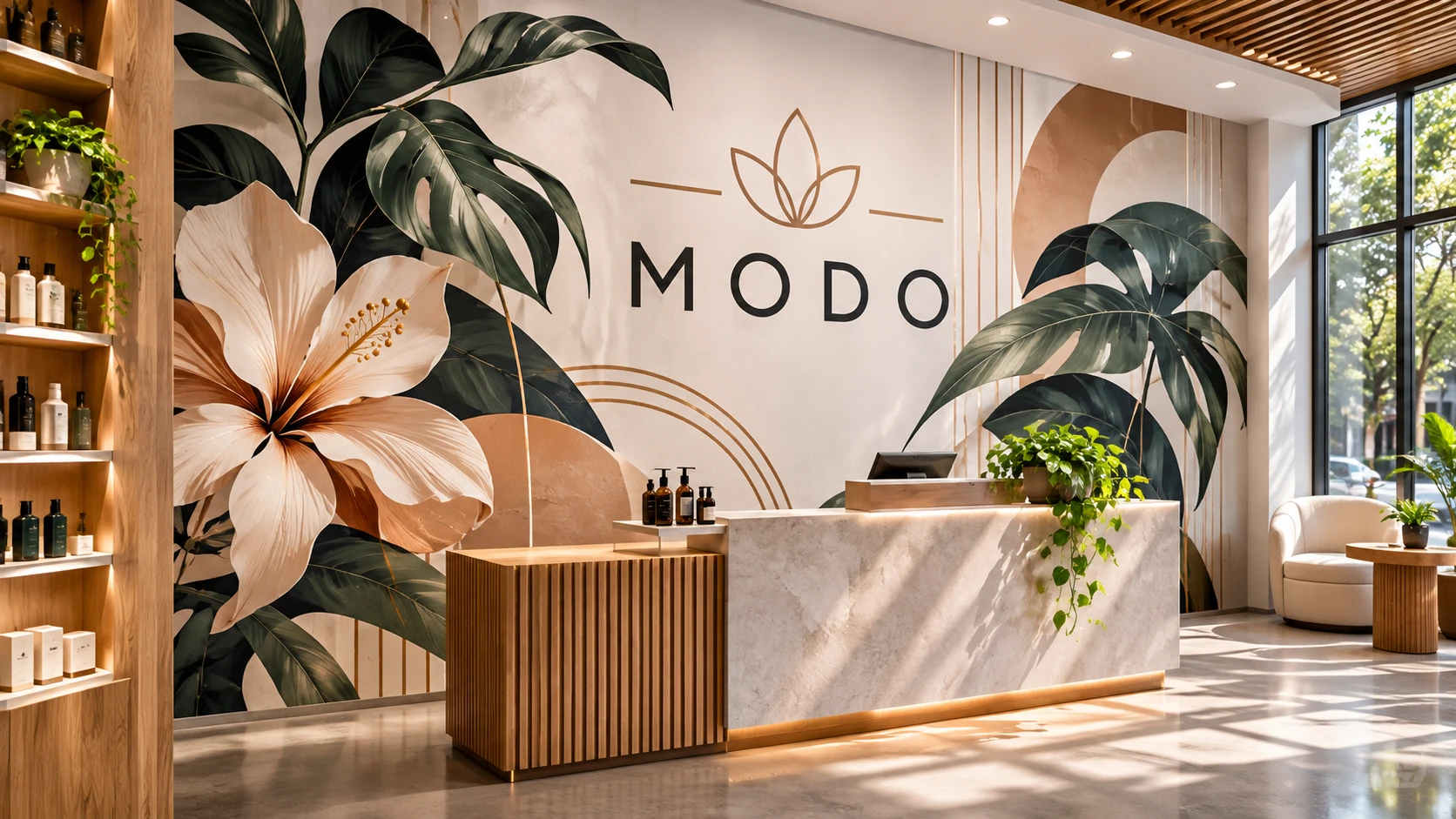
Design visualization of a branded feature wall
These are potential applications—not a promise that every wall, panel or floor will accept ink. Suitability depends on the actual material, finish, environment and access.
Painted drywall and interior plaster can be suitable once the coating is stable, fully cured and clean. Gloss level, repair patches and previous paint quality can affect the result.
Porosity, loose dust, moisture and sealers all matter. Surface cleaning, sealing or testing may be necessary before a print is approved.
Recessed mortar lines, deep texture and surface irregularities can interrupt fine artwork and may exceed equipment clearance. We assess each wall before confirming feasibility.
Sealed and stable wood-based surfaces can be considered. Grain, sanding, sealers, paint and moisture influence both appearance and adhesion.
Glass is non-porous. Adhesion preparation or a compatible primer may be needed, and some glass types or finishes may not be suitable.
Surface finishes, oils, coatings and environmental exposure affect adhesion. Suitable preparation and a small test may be required.
Not all plastics accept UV ink reliably. The specific PVC formulation, surface treatment, mounting and application must be reviewed.
Coating, weave, tension and rigidity can change print quality. This is a specialty application assessed individually.
Glazed tile can be difficult for ink adhesion. Primer compatibility, grout lines, cleaning and expected abrasion must be assessed.
Natural variation, porosity and sealers affect adhesion and appearance. We do not assume that polished or untreated stone is automatically compatible.
Some acrylic coatings and plastic formulations require cleaning or adhesion treatments. We confirm substrate compatibility first.
Foot traffic, wet conditions, cleaning, wear and slip resistance are critical. Any floor printing requires an individual suitability and protective-finish assessment; outdoor projects are especially conditional.
Our wall printer features automatic printhead height adjustment of up to approximately 3 cm, helping accommodate moderate changes in surface depth on suitable brick, concrete and textured walls.
This describes the printhead adjustment range, not a guarantee that every 3 cm-deep recess or projection can be printed without limitations. Mortar joints, uneven edges, surface condition, clearance and artwork detail are assessed before confirming suitability.
Ask about your textured wall ↗Have an unusual surface? Send us a photo, approximate dimensions, material details and intended use. We can assess whether a direct-print application is practical and whether a test or primer would be needed.
Request a surface review ↗Every surface is different. We check conditions before quoting to help avoid adhesion issues and surprises on site.
We review texture, coatings, moisture, cleanliness, dimensions and printer clearance. The condition of the substrate may limit detail or rule out a direct print.
Some surfaces need cleaning, curing time, sealing, a compatible primer or a small adhesion test. Glass, metal, glossy tile and some plastics can be especially challenging.
We consider sunlight, traffic, washing and abrasion. Floor applications require additional attention to slip resistance and any protective topcoat.
UV-curable ink is cured by light during printing. Its useful lifespan is affected by the ink system, the surface beneath it, preparation, exposure and maintenance—not by a universal number of years.
Indicative lifespan ranges for suitable, properly prepared surfaces under normal use and maintenance.
These are approximate expectations, not a product or installation warranty. Real-world lifespan depends on the substrate, surface preparation, adhesion, print location, UV exposure, moisture, wear, protective coating and cleaning. High-traffic floors may need additional protective finishing, subject to slip-resistance assessment.
Indoor feature walls often avoid the intense sun, weather and abrasion faced by exterior or walked-on surfaces. Longevity still depends on adhesion, cleaning practices and the wall coating.
These are approximate expectations. The finish, maintenance and actual conditions determine the result.
UV exposure, rain, freeze-thaw cycles, foot traffic, cleaning agents and scraping can accelerate wear. Protective finishing may help in appropriate applications, but floor safety and material compatibility must be assessed first.
Outdoor and high-traffic conditions can reduce service life; all quoted ranges remain estimates, not guarantees.
In many cases, yes. The appropriate method depends on what was printed and the underlying material. Direct printing does not mean every design can be peeled away like a sticker.
To refresh a painted wall, the existing design can often be covered using suitable primer and paint. Surface repairs or additional coats may be needed first.
Removing UV ink may require a material-specific process or professional refinishing. Removers and scraping can damage coatings or the underlying finish, so test methods first.
Fresh logos, new campaigns, seasonal artwork and tenant changes can be considered after assessing how to prepare the existing surface for a new design.
For suitable applications, UV-curable ink is printed onto a prepared surface rather than applying a full-wall vinyl sheet or wallpaper panel. Your artwork is designed around the space itself.
Explore direct-to-wall printing ↗No. Texture, finish, coating, moisture and access vary. We need to review the specific surface, and some materials may require a compatible primer or may not be suitable at all.
No. Floor safety depends on the entire finished system, including coatings, traffic and wet conditions. Any floor application needs an appropriate suitability and slip-resistance review.
Not without project-specific conditions and supporting product information. Wear and fade vary across materials and environments, so we discuss expectations based on the actual application.
Send a clear photo, your city, approximate width and height, material or current coating, whether the area is indoors or outdoors, and how the surface is used.